 UK Based Pharmacy
  Discreet Packaging
  Next Day Delivery



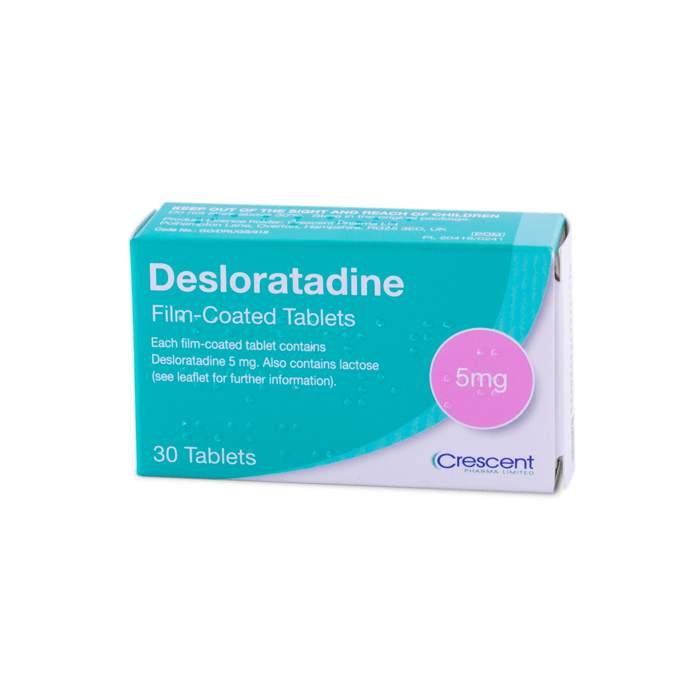
Desloratadine 5mg – 30 Tablets
Desloratadine is a non-drowsy antihistamine used to treat the hay fever or allergic rhinitis. It eases symptoms such as sneezing, watery eyes, and runny nose.

Discreet Packaging

UK Based
-
What is Desloratadine and what does it do?
It helps control your allergic reaction and its symptoms. Desloratadine should be used to relieves symptoms associated with allergic rhinitis (inflammation of the nasal passages caused by an allergy, for example, hay fever or allergy to dust mites) in adults and adolescents 12 years of age and older. These symptoms include sneezing, runny or itchy nose, itchy palate, and itchy, red or watery eyes. Desloratadine is also used to relieve the symptoms associated with urticaria (a skin condition caused by an allergy). These symptoms include itching and hives. Relief of these symptoms lasts a full day and helps you to resume your normal daily activities and sleep See our full range of allergy relief treatments. For more information about allergies, click here.Do not use these tablets if you have:
- an allergy to desloratadine, or any of the other ingredients of this medicine or to loratadine.
- poor kidney function.
- medical or familial history of seizures.
- Pregnant or breastfeeding.
How do you take Desloratadine?
Always take this medicine exactly as your doctor or pharmacist has told you. Check with your doctor or pharmacist if you are not sure. Adults and adolescents 12 years of age and over The recommended dose is one tablet once a day with water, with or without food. This medicine is for oral use, swallow the tablet whole. Regarding the duration of treatment, your doctor will determine the type of allergic rhinitis you are suffering from and will determine for how long you should take Desloratadine. If your allergic rhinitis is intermittent (presence of symptoms for less than 4 days per week or for less than 4 weeks), your doctor will recommend you a treatment schedule that will depend on the evaluation of the history of your disease. If your allergic rhinitis is persistent (presence of symptoms for 4 days or more per week and for more than 4 weeks), your doctor may recommend you a longer term treatment. For urticaria, the duration of treatment may be variable from patient to patient and therefore you should follow the instructions of your doctor.